Featured
Table of Contents
- – The Shift Toward Privacy-Centric Data Environm...
- – Steve Morris on the Evolution of Digital Exposure
- – Making The Most Of Effectiveness Through AI Se...
- – The Increase of First-Party Data and Consent-B...
- – Contextual Targeting Makes a High-Tech Resurg...
- – The Role of Predictive Modeling in Localized ...
- – RankOS and the Future of Algorithmic Authority
- – Adapting to the New Reality of Advertisement ...
- – Closing the Space In Between Personal Privacy...
The Shift Toward Privacy-Centric Data Environments in 2026
Advertising in 2026 looks nothing like the tracking-heavy designs of a years ago. The overall removal of third-party cookies across all major browsers and the tightening of global privacy laws have forced a complete rewrite of how brands find their clients. Performance in advertisement invest now counts on a mix of first-party information and sophisticated predictive modeling. Brands that formerly counted on granular tracking now face a truth where anonymity is the default setting for the majority of consumers.Data personal privacy is no longer a compliance checkbox. It is the main architectural restraint for every single campaign introduced in urban markets. Regulative bodies in the national market have actually established rigorous borders on cross-site tracking, making it almost difficult to follow a single user across their entire digital session. Instead, the market has actually turned toward information clean spaces where different entities can analyze aggregated datasets without ever exchanging personally recognizable details.
Steve Morris on the Evolution of Digital Exposure
Digital strategy in 2026 requires a much deeper understanding of how algorithms translate brand name authority. Steve Morris, CEO of the agency NEWMEDIA.COM, has kept in mind in recent interviews that the focus has actually moved from going after individual users to dominating the topical authority within specific niches. The company, which runs in major centers like Chicago, Atlanta, and NYC, has actually observed that advertisement invest efficiency is now connected straight to how well a brand name is indexed by generative AI search engines.Visibility is no longer practically bidding on keywords. It includes making sure that a company's entire digital footprint is structured for Generative Engine Optimization (GEO) When AI search models supply responses to user inquiries, they prioritize brands that reveal clear know-how and trust. This change has actually made organizations concentrate on PPC Campaigns to ensure they remain appropriate in an era where AI-driven answers typically change standard search results page lists.
Making The Most Of Effectiveness Through AI Search Optimization
Advertisement invest in 2026 is progressively diverted far from standard banners and toward AI search visibility services. NEWMEDIA.COM has actually been at the center of this shift with their RankOS platform. This innovation examines how AI models view brand points out, belief, and factual precision across the web. If a brand name does not appear in the "cited sources" or "suggested options" of a major AI search assistant, its digital presence basically disappears for a large part of the market.Efficiency comes from being the answer, not just a disturbance. Many organizations find that Targeted PPC Campaigns Management has ended up being vital for modern companies wishing to reduce their client acquisition costs. By lining up content with the way Large Language Models (LLMs) categorize details, business can earn "organic" placement within AI responses, which often carries greater conversion rates than traditional paid placements. This synergy in between paid and organic AI exposure defines the 2026 technique for competitive companies.
The Increase of First-Party Data and Consent-Based Marketing
Direct relationships with consumers are now the most important asset in a marketing department's arsenal. Without third-party tracking, brand names should find innovative methods to motivate users to share their choices voluntarily. This zero-party data-- details that a customer deliberately shares-- enables personalization without the personal privacy threats connected with scraping behaviors.In 2026, commitment programs, interactive material, and value-driven newsletters serve as the primary engines for data collection. These methods enable brands to build high-fidelity profiles that they own entirely. Brands count on PPC Campaigns for High Conversion to bridge the space between initial discovery and long-term retention. When a brand understands exactly what its clients worth since those consumers told them straight, the need for expensive, broad-reach prospecting decreases significantly.
Contextual Targeting Makes a High-Tech Resurgence
Contextual targeting has actually been reborn through advanced natural language processing. In the 2026 landscape, advertisers no longer require to understand who the person is to know what they are interested in. Modern AI can analyze the particular sentiment and intent of a webpage in milliseconds, placing advertisements that are perfectly lined up with the content the user is consuming.This approach avoids the personal privacy mistakes of behavioral tracking while keeping high significance. If a user reads an article about B2b Ppc That Fills Sales Pipelines in a publication concentrated on Dallas or Miami, the advertisements they see will be tailored to the complexity of that topic. This environment-first approach makes sure that ad invest is not squandered on users who are not in the ideal mindset to engage with a particular product and services.
The Role of Predictive Modeling in Localized Markets
Predictive analytics has changed the "lookalike" audiences of the past. Instead of matching a brand-new user to an existing client based upon individual information, companies now use probabilistic modeling to determine the likelihood of a conversion. This involves examining enormous sets of anonymized information to discover patterns in time of day, gadget type, and content consumption.For a service operating in LA or Nashville, this suggests targeting can be hyper-localized without getting into private personal privacy. Predictive models can figure out that users in certain neighborhoods are most likely to engage with B2b Ppc That Fills Sales Pipelines throughout particular weather condition patterns or economic shifts. This high-level pattern recognition permits huge effectiveness gains, as budget plans are concentrated on high-probability windows rather than continuous, generalized broadcasting.
RankOS and the Future of Algorithmic Authority
As AI continues to curate the internet, the idea of a "site" is changing. Many users now interact with brands through API-driven interfaces or AI summaries instead of visiting a homepage. RankOS was created to keep track of these brand-new touchpoints. By tracking how a brand name is represented in the latent space of major LLMs, the platform offers a roadmap for increasing digital authority.This is not practically SEO in the traditional sense. It has to do with becoming a foundational part of the training information and the real-time retrieval systems that power 2026's online search engine. When an AI agent recommends a service in a specific local market, it does so based on a web of trust and citations. Ensuring those citations are accurate and positive is the new frontier of track record management and ad performance.
Adapting to the New Reality of Advertisement Invest
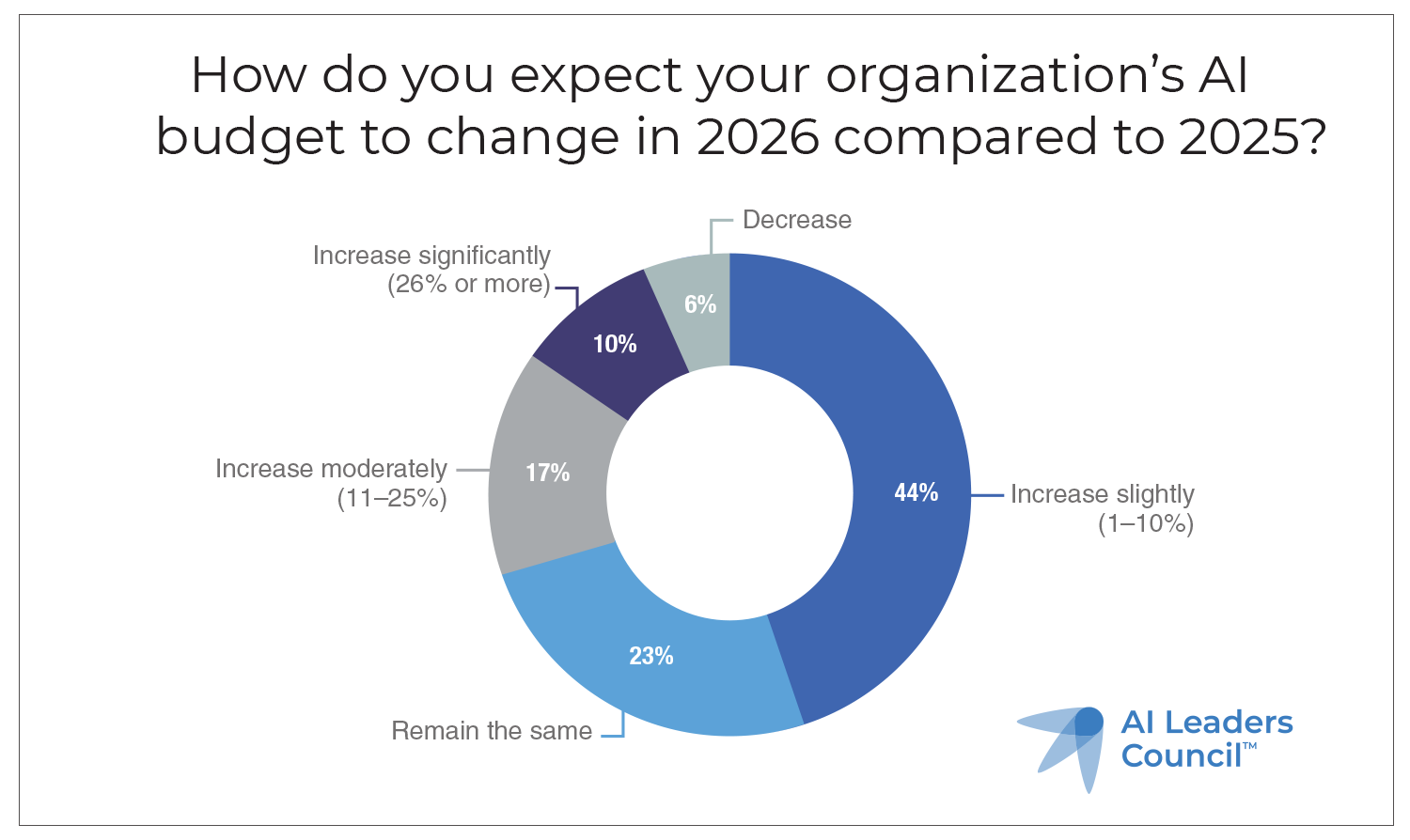
Marketing budget plans in 2026 are progressively designated towards technical facilities. Instead of costs 90% of a budget plan on the media buy itself, business are purchasing the information architecture required to make smaller sized media purchases more efficient. This include investments in server-side tracking, which permits better attribution without compromising user-side privacy.Total transparency in information usage has actually become a competitive advantage. Brand names that are clear about why they require data and how they utilize it tend to see higher opt-in rates. In the major markets like Denver and Atlanta, customers are smart sufficient to pick brand names that appreciate their digital limits. This trust equates straight into greater lifetime value and lower churn, which are the ultimate metrics of ad spend effectiveness in the contemporary era.
Closing the Space In Between Personal Privacy and Efficiency
The stress between privacy and performance has stimulated a duration of quick technical development. The tools offered today permit for a level of precision that was as soon as believed impossible without invasive tracking. By utilizing artificial data to fill out the spaces in customer journeys, marketers can still perform in-depth attribution without ever seeing a genuine user's individual details.As we move deeper into 2026, the brand names that prosper will be those that view privacy as a function rather than a bug. Agencies that provide B2b Ppc That Fills Sales Pipelines are no longer simply imaginative partners-- they are technical navigators helping brands make it through in a world where data is restricted but the demand for results is greater than ever. The future belongs to those who can wed human-centric storytelling with the stringent, mathematical realities of an AI-driven, privacy-first world.

Table of Contents
- – The Shift Toward Privacy-Centric Data Environm...
- – Steve Morris on the Evolution of Digital Exposure
- – Making The Most Of Effectiveness Through AI Se...
- – The Increase of First-Party Data and Consent-B...
- – Contextual Targeting Makes a High-Tech Resurg...
- – The Role of Predictive Modeling in Localized ...
- – RankOS and the Future of Algorithmic Authority
- – Adapting to the New Reality of Advertisement ...
- – Closing the Space In Between Personal Privacy...
Latest Posts
Harnessing AI for Improved Brand Relations
How SEO Drives Modern PR and ROI
Why Significance Matters More Than Ever for Rankings
More
Latest Posts
Harnessing AI for Improved Brand Relations
How SEO Drives Modern PR and ROI
Why Significance Matters More Than Ever for Rankings